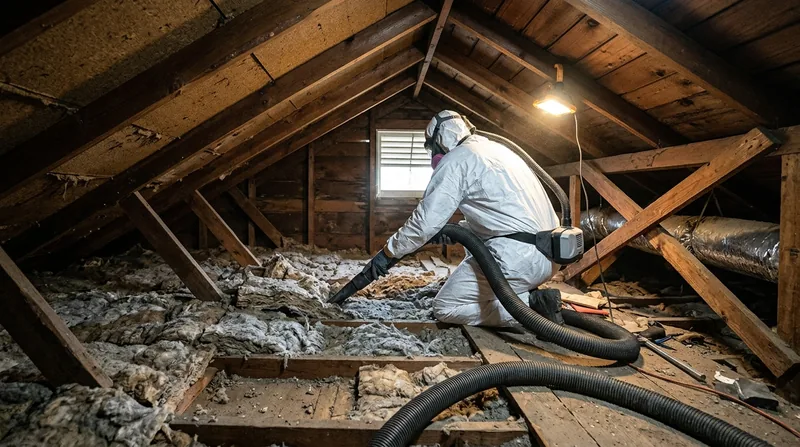




Older homes across Midtown, Wynnton, and Lakebottom in Columbus often carry insulation that has settled flat or degraded over decades, leaving attics and crawl spaces unable to resist the relentless heat and humidity of the Chattahoochee Valley. When insulation removal in Columbus becomes necessary, the job demands precision: we extract old, failed, or contaminated material completely before new spray foam can go in and perform. Whether your attic insulation has compacted to half its original thickness, or your crawl space holds moisture-damaged fiberglass that no longer blocks the damp red clay air rising from below, removal is the foundation of every retrofit we do. The process is straightforward but physically demanding, and done right it sets up your home for decades of performance. We haul everything away and dispose of it properly, so you start fresh with a clean substrate and the right foam system for Columbus' hot, humid climate.
Why Insulation Removal Matters in Columbus: The Settled Attic Problem
Columbus summers push heat through a roof deck from outside while moisture pushes in from the Chattahoochee Valley air. Fiberglass and mineral wool insulation installed thirty or forty years ago has settled under its own weight, compressing from a nominal R-30 or R-38 down to R-15 or less. A settled attic creates two problems at once: the roof deck runs ten to fifteen degrees hotter than it should, driving your cooling costs up, and the ductwork that runs through that attic loses conditioned air before it ever reaches your rooms. Crawl spaces present a different failure: vented foundations pull in humid air, the insulation absorbs moisture, and the floor system above stays cold and clammy even in summer. Old insulation that has absorbed moisture or settled flat cannot be topped up with foam; it must be removed first.
- We remove settled fiberglass, mineral wool, and cellulose from attics without disturbing the roof structure or damaging rafters and trusses.
- We extract soggy or mold-damaged insulation from crawl spaces and haul it to an approved disposal site.
- We clear old foam that has failed, cracked, or been installed incorrectly so new foam can bond to a clean substrate.
- We work safely around electrical wiring, plumbing, and HVAC equipment, protecting what stays in place.
- We document what we remove so you have a clear record of what was there and what condition it was in when we started.
Proper removal ensures your new spray foam installation meets manufacturer specifications and performs as designed for the long term.
Key info: Columbus sits in IECC climate zone 3A with hot, humid summers and moisture pressure from outside nearly year-round. Settled insulation in Midtown and Wynnton homes built in the 1950s and 1960s is the single biggest driver of high cooling bills in this area. Removal before retrofit is not optional; it is the standard practice.
For details on Georgia's building code requirements for attic ventilation and thermal barriers, consult the Georgia Department of Community Affairs, which oversees the energy code in force at your address.
How We Remove Insulation in Columbus: A Step-by-Step Process
Removal begins with a site walk to identify what's there, its condition, and any obstacles. We assess whether the substrate below (roof deck, joists, floor framing) is sound or damaged, and we note any moisture, mold, or pest activity that needs addressing before foam goes in. The actual removal is done systematically: we bag or bin the material, isolate dust with temporary containment if needed, and maintain air quality during the work. Once the space is clear, we inspect and clean the substrate, repair any damaged wood or flashing, and verify the space is dry and ready for spray foam application.
- We inspect the attic or crawl space and document existing conditions, materials, and any visible damage or moisture.
- We remove all old insulation, debris, and contaminated material using commercial-grade equipment and proper containment.
- We haul away and dispose of removed material at an approved facility, keeping your property clean.
- We inspect the substrate (roof deck, joists, band board, rim joist) and repair damage or seal gaps where needed.
- We verify the space is dry and ready before spray foam application begins, checking moisture levels and confirming ventilation if required by code.
This methodical approach ensures that when new spray foam insulation is applied, it bonds to a clean, sound surface and performs to specification.
Example: A 1960s ranch in Wynnton with a vented attic and R-19 fiberglass settled to R-12 across 1,200 square feet. We removed all the old material in one day, found minor water stains on the north roof deck (repaired), and the space was ready for closed-cell foam the next morning. The homeowner went from 78 degrees in the attic in July to 82 degrees after retrofit, cutting cooling runtime by roughly 20 percent.
Insulation Removal Methods: What Works Best in Columbus
| Approach | Description | Best for |
|---|---|---|
| Attic Removal with Containment | Bag or bin settled fiberglass and mineral wool using negative air and dust control to protect the home interior and HVAC system. | Settled insulation in occupied homes where dust control is critical; standard for any attic retrofit in Columbus. |
| Crawl Space Extraction | Remove damp, contaminated, or moldy insulation from crawl spaces with low headroom, including disposal of debris and moisture assessment. | Vented crawl spaces in Lakebottom and other raised-foundation homes where moisture and humidity have degraded insulation. |
| Failed Foam Removal | Mechanically extract old, cracked, or poorly installed spray foam to bare substrate, preparing for new closed-cell or open-cell application. | Retrofit jobs where prior foam installation was incomplete or incorrect; common when switching foam types or fixing condensation issues. |
| Selective Removal and Top-Up | Remove damaged or settled sections while preserving sound insulation in other areas, then add new foam to reach target R-value. | Attics with partial damage or uneven settling; cost-effective when only portions need replacement. |
Insulation Removal Cost in Columbus: What to Expect
The cost of insulation removal in Columbus depends on the size of the space, the type and condition of material, and how easily it can be accessed and disposed of. A typical attic removal for a 1,200 to 1,500 square foot ranch runs from $950 to $2,200, while a crawl space removal under a raised foundation costs $800 to $1,800. Larger homes, multi-story attics with complex geometry, or spaces with contaminated material will run higher. The biggest variable is how much material is there and whether it needs special handling due to moisture, mold, or other conditions. Getting a written estimate from a local contractor who has seen Columbus homes is the only way to know the real cost for your job.
We provide free estimates within 24 hours at (706) 940-6925. Our estimate includes a walk-through of the space, a description of what we'll remove and how, the disposal method, and a firm price. We also note any substrate damage or moisture issues we spot, so you know what else may need attention before spray foam goes in. Visit our pricing page for more detail on how we structure costs and what factors move the needle.
Removal is an investment that pays back immediately: a clean, dry substrate extends the life of new foam and ensures it performs to spec. Skipping removal or attempting a DIY extraction often leads to poor foam adhesion, voids, and performance loss. The right way to do it once is cheaper than fixing it twice.
What to Look for When Hiring an Insulation Removal Contractor Near Me in Columbus
When you call a spray foam or insulation contractor in Columbus, ask for a detailed written estimate that names the material being removed, the square footage or volume, the disposal method, and the price. A contractor who shows up with no equipment to assess moisture or substrate condition, quotes a price on the phone, or promises to be done in an hour is cutting corners. You should receive a clear timeline, a description of how the space will be protected during work, and confirmation that they carry full insurance. Ask for references from recent jobs in Columbus or nearby towns like LaGrange, West Point, or Americus, and follow up with at least one homeowner to confirm the work was clean and on time.
- Verify that the contractor carries full insurance and can provide a certificate of insurance naming your address as an additional insured.
- Request a written estimate with square footage, material description, disposal plan, timeline, and total price, never a phone quote.
- Ask whether the contractor will inspect substrate condition and provide a report of any damage or moisture found during removal.
- Confirm that removal is complete and the space is clean before any new insulation is applied, with photos or a walkthrough to verify.
- Check references from recent jobs and ask specifically about dust control, cleanup, and whether the work was completed on the promised date.
The best contractor for the job is a local, independent shop with a physical address in Columbus or nearby, not a rig-and-run crew from out of state or a national franchise with a 1-800 number. A local contractor has a reputation to protect in your community and is reachable if questions come up after the work. Contact us at Columbus Spray Foam Insulation to schedule a free estimate and see the difference a local, professional approach makes.
Insulation Removal in Columbus: Pricing Guide
| Service | Price | Details |
|---|---|---|
| Attic Insulation Removal | Starting at $950 | Settled fiberglass or mineral wool from 1,000 to 1,500 sq ft, including containment, bagging, and haul-away |
| Crawl Space Removal | Starting at $800 | Damp or contaminated insulation from vented crawl spaces, including moisture assessment and disposal |
| Failed Spray Foam Removal | Starting at $1,200 | Cracked or poorly bonded foam mechanically extracted to bare substrate, preparation for new application |
| Large or Complex Job | On estimate | Multi-story attics, contaminated material, or extensive substrate repair assessed on-site before pricing |
| Travel and Inspection | Included | No mileage fee or separate travel charge within Columbus and surrounding service area counties |
| Free Estimate | No charge | Written quote with materials, scope, timeline, and price within 24 hours, no obligation to book |
Indicative pricing, the exact cost depends on square footage, finish, and site access. Free personalized estimate within 24h at (706) 940-6925.


