Why Attic Insulation Settles and Loses Its R-Value
If you own a home in Alta Vista Ranches or anywhere in Columbus, you may have noticed your heating and cooling bills creeping up over the years, even though your insulation looks intact. The culprit is often settled insulation. Traditional blown-in insulation, including fiberglass and cellulose products, naturally compacts over time due to gravity, moisture, and vibration from HVAC systems. This settling reduces the material's thickness and, critically, its R-value (thermal resistance).
When insulation settles, air pockets collapse and the material becomes denser in some areas while leaving gaps in others. A batch of blown-in insulation installed at R-38 can effectively perform at R-25 or lower within just 5 to 10 years. This degradation means your attic is no longer providing the thermal barrier it once did, forcing your heating and cooling systems to work harder and longer to maintain comfortable indoor temperatures. Homeowners often don't realize the problem until they notice their energy bills have spiked or their home feels drafty and uncomfortable.
Spray Foam vs Blown-In Insulation: Why Spray Foam Doesn't Settle
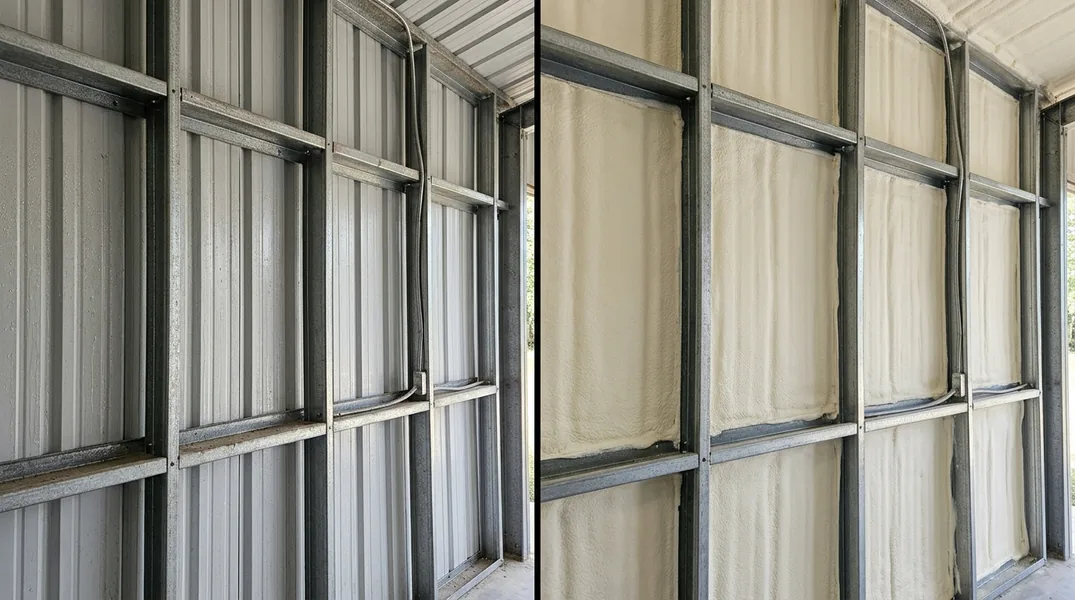
When comparing spray foam vs blown in insulation, the most significant advantage of spray foam is its permanent expansion and adhesion properties. Attic Spray Foam Insulation is applied as a liquid that expands in place, filling every crack, crevice, and void in your attic. Once cured, it hardens into a rigid foam that maintains its shape indefinitely. Unlike blown-in materials, spray foam does not settle, compress, or degrade over time due to gravity or vibration. This means the R-value you install today remains the R-value you have 20, 30, or even 50 years from now.
The structural integrity of spray foam also seals air leaks that blown-in insulation cannot address. While blown-in fiberglass or cellulose may fill the space between joists, it does not create an airtight seal around electrical penetrations, ductwork, or rim joists. Spray foam expands and adheres to every surface, creating a complete thermal and air barrier. This is why many energy auditors and contractors in Columbus recommend spray foam as a superior long-term solution for attics that have experienced settling issues.
Spray Foam vs Fiberglass: Performance and Durability in Alta Vista Ranches
The debate of spray foam vs fiberglass often comes down to upfront cost versus long-term performance. Fiberglass batts and blown-in fiberglass are inexpensive and easy to install, which is why they remain popular for new construction and budget-conscious renovations. However, fiberglass is hydrophilic, meaning it absorbs moisture. In humid climates like Georgia, moisture absorption can reduce fiberglass R-value by 25 to 50 percent. Additionally, fiberglass settles, creating gaps over time that allow conditioned air to escape and unconditioned air to infiltrate your living spaces.
Closed Cell Spray Foam Insulation is hydrophobic and impermeable to moisture, making it ideal for attics in humid regions. It provides superior air sealing, higher R-value per inch of thickness, and zero settling. While closed cell spray foam costs more upfront, it delivers measurable energy savings that typically offset the initial investment within 5 to 7 years. For homeowners in Alta Vista Ranches dealing with settled fiberglass insulation, upgrading to spray foam is a smart investment that pays dividends in comfort and efficiency.
Spray Foam vs Cellulose: Why Cellulose Also Settles
Cellulose is often marketed as an eco-friendly alternative to fiberglass, and while it does contain recycled paper fibers, it shares the same fundamental weakness as fiberglass: it settles. Spray foam vs cellulose comparisons reveal that cellulose can settle by 10 to 20 percent within the first few years, and continues to compact slowly over decades. Cellulose is also highly susceptible to moisture absorption and can develop mold or mildew if your attic experiences condensation or roof leaks. In humid climates, cellulose requires careful installation with proper vapor barriers and ventilation, adding complexity and cost.
Spray foam eliminates these concerns entirely. Open Cell Spray Foam Insulation is slightly less dense than closed cell but still provides excellent R-value per inch and does not settle or absorb moisture like cellulose. For homeowners in Alta Vista Ranches who want a durable, low-maintenance insulation solution that performs consistently for decades, spray foam outperforms cellulose in every meaningful way. The environmental argument for cellulose is also weaker when you consider that spray foam lasts far longer, reducing the need for replacement and the waste associated with frequent re-insulation projects.
Best Insulation for Attic: Why Spray Foam Wins for Settled Insulation Replacement
When determining the best insulation for attic replacement projects, especially when dealing with settled or degraded existing insulation, spray foam consistently emerges as the top choice for serious homeowners. The reason is simple: spray foam addresses every failure mode that plagues traditional blown-in insulation. It does not settle, does not absorb moisture, does not develop air leaks around penetrations, and maintains its R-value indefinitely. For attics in Alta Vista Ranches that have experienced energy loss due to settled insulation, spray foam restores thermal performance and often improves it beyond what the original installation provided.
The installation process for spray foam requires professional equipment and trained technicians, which is why you should never attempt this as a DIY project. Columbus Spray Foam Insulation has the expertise and equipment to properly assess your attic, remove old settled insulation if needed, and apply spray foam to maximize thermal performance and air sealing. The result is a dramatically more comfortable home, lower energy bills, and peace of mind knowing your insulation will perform consistently for decades to come.
Attic Spray Foam Insulation Cost in Columbus: What to Budget
Understanding the pricing for spray foam insulation helps homeowners make informed decisions about their attic upgrade. Spray foam typically costs more per square foot than blown-in fiberglass or cellulose, ranging from $1.50 to $3.00 per board foot depending on the type of foam, local labor costs, and the complexity of your attic layout. For a typical 1,500-square-foot attic, homeowners can expect to invest between $3,000 and $6,000 for a complete spray foam installation. While this is a significant upfront expense, the energy savings and durability make it a worthwhile investment.
To understand how spray foam compares to your specific situation, Columbus Spray Foam Insulation offers a free estimate that includes a detailed assessment of your attic, recommendations for the best foam type (closed cell or open cell), and an accurate quote based on your home's unique needs. Call (706) 940-6925 or visit our website to contact us for your free estimate. Our team will help you understand the long-term value of spray foam and answer any questions you have about the installation process, timeline, and expected energy savings. Don't let settled insulation continue to waste your money on inflated utility bills. Invest in spray foam and enjoy lasting comfort and efficiency.
Looking for a professional spray foam insulation contractor in Columbus? Columbus Spray Foam Insulation responds fast for all your spray foam insulation needs.
Get a Free Quote