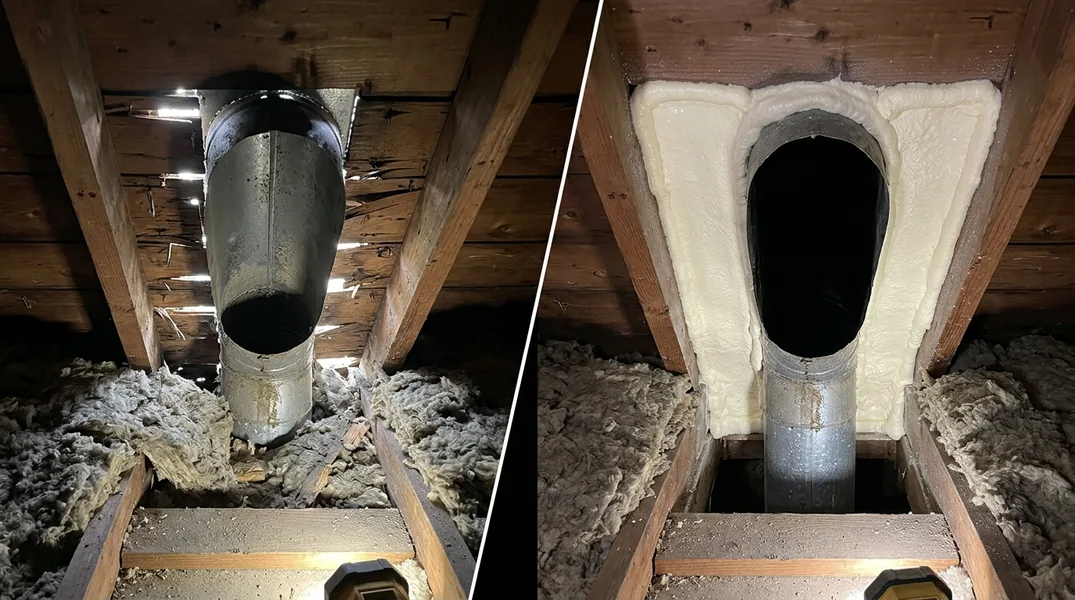
Understanding Spray Foam Types for Your Attic
When you're considering Attic Spray Foam Insulation for your home in Columbus, one of the first decisions you'll need to make is whether open cell or closed cell spray foam is right for your needs. Both types offer significant improvements over traditional fiberglass insulation, but they work differently and come with distinct advantages and trade-offs. Understanding these differences will help you make an informed choice that aligns with your budget, climate, and long-term energy goals.
Spray foam insulation has revolutionized how homeowners approach attic insulation. Unlike traditional materials that simply sit between rafters and joists, spray foam expands to fill every gap, crack, and void. This creates an air seal that dramatically reduces thermal transfer and air leakage. However, the two main types of spray foam (open cell and closed cell) achieve this in different ways, with different material compositions and performance characteristics that matter for Columbus homeowners.
What Is Open Cell Spray Foam Insulation?
Open Cell Spray Foam Insulation is a lighter-density material with a structure that resembles a sponge. During application, the foam expands significantly and the cells remain partially open, allowing air and moisture vapor to pass through the material. This characteristic makes open cell foam more flexible and softer than its closed cell counterpart. The expansion ratio is typically higher, meaning contractors can cover more square footage with less material, which often translates to lower upfront costs.
One of the key benefits of open cell foam is its sound-dampening properties. Because of its porous structure, it absorbs sound waves effectively, making it an excellent choice if noise reduction is a priority. Additionally, open cell foam is more forgiving during installation and conforms well to irregular attic spaces, joists, and obstacles. However, because the cells remain open, this type of foam is more permeable to air and moisture. In humid climates, this characteristic requires careful consideration, as moisture can migrate through the foam if a proper vapor barrier isn't in place. The R-value per inch is typically lower than closed cell foam, usually around 3.5 to 3.6 R-value per inch.
What Is Closed Cell Spray Foam Insulation?
Closed Cell Spray Foam Insulation is a denser material where the cell structure is completely sealed. This means the foam is impermeable to air and moisture, creating a true vapor barrier as well as an air seal. Closed cell foam has a much lower expansion ratio than open cell, so it requires more material to cover the same area, which increases material costs. However, the superior density and impermeability make it significantly more effective at blocking moisture and air infiltration.
The R-value of closed cell foam is substantially higher, typically ranging from 6.0 to 7.0 per inch, meaning you need less thickness to achieve the same insulation performance as open cell. This density also makes closed cell foam more durable and better suited for applications where structural integrity matters. In addition to superior thermal and moisture resistance, closed cell foam adds rigidity to attic structures and can even contribute to the structural strength of the building envelope. For homeowners seeking maximum energy efficiency and the strongest moisture protection, closed cell foam is often the preferred choice, though it comes at a higher initial investment.
Sealed Attic Insulation: Creating an Unvented Attic Space
One of the most significant advantages of spray foam insulation is the ability to create what's known as a sealed attic insulation system, also called an unvented attic. Traditionally, attics are ventilated to allow moisture and heat to escape. However, with Columbus homes, an unvented attic spray foam approach offers compelling benefits. By spraying foam directly against the roof deck and along the walls, you create a conditioned space that's part of your home's thermal envelope rather than a separate, vented space.
An unvented attic spray foam system improves energy efficiency significantly because you're no longer conditioning air that escapes through ventilation. The foam seals all air leaks, prevents conditioned air from escaping, and maintains more consistent temperatures year-round. This approach also eliminates moisture problems that can occur in traditional ventilated attics, particularly in humid climates. When you seal the attic from outside air infiltration and create a vapor barrier with closed cell foam, you prevent the moisture cycling that can lead to mold, wood rot, and structural damage. For homeowners in Columbus looking to maximize comfort and reduce energy bills, an unvented attic with spray foam is an investment that pays dividends for decades.
Open Cell vs Closed Cell: Cost and Performance Comparison for Columbus Homes
When comparing open cell and closed cell spray foam, the decision often comes down to balancing upfront costs with long-term performance. Open cell foam typically costs less per square foot to install because it expands more and requires less material. If your primary goal is achieving a reasonable R-value at the lowest possible price, open cell may be attractive. However, the lower R-value per inch means you'll need greater thickness to achieve the same insulation performance, which can offset some of the cost savings.
Closed cell foam costs more initially, but delivers superior R-value, complete moisture protection, and greater durability. For homeowners serious about maximizing energy savings and protecting their attic from moisture damage, closed cell foam typically provides better value over the life of the home. The higher upfront cost is offset by lower heating and cooling bills, reduced risk of moisture-related repairs, and the added structural benefits. Your specific situation, local climate conditions, and long-term plans for your home all factor into which option makes the most financial sense. Columbus Spray Foam Insulation can help you evaluate both options and determine which delivers the best return on investment for your particular home. Contact us at (706) 940-6925 to discuss your attic insulation needs and get a detailed analysis of costs versus performance benefits.
Choosing the Right Spray Foam for Your Columbus Home
Selecting between open cell and closed cell spray foam depends on several factors specific to your home and situation. If moisture control is a top concern, closed cell foam's vapor barrier properties make it the superior choice. If you're working with a tight budget and your attic doesn't have significant moisture issues, open cell foam can still provide excellent insulation and air sealing benefits. Climate also matters. Columbus experiences warm, humid summers and mild winters, which means moisture management is important. This climate profile often favors closed cell foam for its complete moisture protection, though open cell with proper ventilation strategies can also work well.
The best way to determine which option is right for your home is to have a professional assessment. Columbus Spray Foam Insulation specializes in both open cell and closed cell applications and can evaluate your attic's current condition, moisture levels, air leakage, and energy performance. We'll help you understand the pros and cons of each option and recommend the solution that delivers the best results for your home and budget. Whether you're looking to improve energy efficiency, reduce utility bills, or address moisture problems, spray foam insulation is a proven solution. Reach out to us for a free estimate today, and let's discuss which spray foam type will work best for your attic.
Looking for a professional spray foam insulation contractor in Columbus? Columbus Spray Foam Insulation responds fast for all your spray foam insulation needs.
Get a Free Quote